Come Home While It's Still Fun: The Case for Short Winter Sails
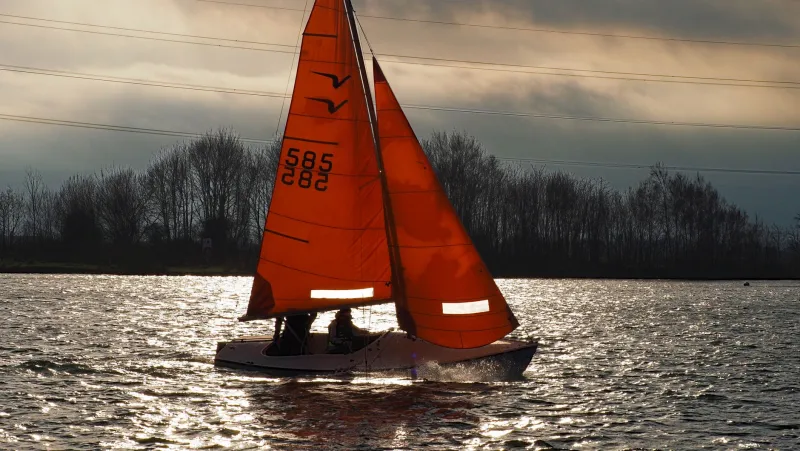
There is a moment on a winter sail when the day quietly changes character. It is usually around half past two. The light goes flat, the wind finds a new way through your collar, and the conversation in the cockpit drops to the level of practical instructions. You planned a full day because the forecast looked decent and you had the time. Now you are motoring home in the dusk with a cold crew and a boat full of damp kit, wondering why you did not simply turn round an hour earlier.
The answer is not more thermals or a bigger flask. It is a smaller plan. For winter day sails, two hours on the water is often the sweet spot: long enough to feel like you have been somewhere, short enough that you come home with something left in the tank.
Why the short version wins
Winter daylight is rationed. In southern England, sunset sits around four o'clock in December; further north it comes earlier still. Add the hour or so of faffing that any boat trip involves, plus the drive home, and a six-hour passage starts to look less like a day out and more like a logistics exercise.
Cold works on crews in a way that summer heat does not. It slows hands, shortens patience and makes decisions feel heavier. A two-hour window keeps everyone inside their comfortable operating range. It also leaves margin: for the tide that runs a little harder than the chart suggested, the engine that takes an extra turn, or the crew member who is quietly not enjoying themselves.
And there is the simple matter of frequency. A short sail you actually do beats a long one you keep postponing. String together a few two-hour outings across the winter and you will have spent more time afloat than most people manage between October and March.
Do the light maths first, then the tide
Start with the sunset time and work backwards. Allow an hour of buffer before dark, then subtract your two hours on the water. That gives you the latest sensible cast-off. In practice, a winter sail often wants to start around late morning and be tied up by early afternoon.
Tide comes next. A two-hour sail is ideal for a single tidal gate: a harbour entrance, a sill, a lock, or a bar that only behaves at certain states. Check the gate before you check the route. If the tide says the window is 11:15 to 13:15, that is your sail; the passage plan fits inside it, not the other way round.
Choose a route with a built-in turning point
The best short winter routes have an obvious place to turn around. An out-and-back to a mark, a triangle inside the harbour, or a reach to a sheltered lunch spot all work well. What you want to avoid is a route with a commitment in the middle: a long leg down a loch, a passage that only makes sense if you carry on to the next port, or a destination that tempts you to stay longer than the light allows.
Pick a turning mark you can reach in about fifty minutes in the conditions of the day. If you get there early, you can always spend ten minutes hove-to with the flask out. If you get there late, you turn round anyway. The mark is the plan; the sail is the point.
Pre-departure checks worth doing twice
Winter has a way of exposing the things you skipped in summer. Before you leave the pontoon:
- Start the engine before you cast off, not after. Cold diesels are less forgiving, and a battery that is merely tired in July can be flat in January.
- Look over the rig properly. Shackles, split pins, halyard tails, reefing lines. Cold makes metal brittle and fingers clumsy; do the check with gloves off and then put them back on.
- Reef early. A winter breeze often carries more weight than the same number of knots in June, and a reef put in at the pontoon is easier than one put in at the mast in a squall.
- Pack for the day you are actually having: flask, spare gloves, a dry bag for the things that must not get wet, and a phone in a waterproof case.
- Tell someone the plan. A short text with your route, crew and expected return time is the cheapest safety kit on board.
Finish before the fun runs out
The trick to ending a winter sail well is to plan the ending. Aim to be alongside with the kettle on before the light goes. Take ten minutes to tidy the boat, rinse the salt off, and write a line in the log. Then go and find a pub, a tea room or a chip shop, and let the day finish properly.
Do not be tempted by one more tack. The difference between a good winter sail and a cold, tired slog is often fifteen minutes of enthusiasm. Bank the good bit. Come home while it is still fun, and the next short sail will be something everyone says yes to.
The two-hour habit
A short winter sail is not a compromise; it is a rhythm. It keeps the boat used, the engine exercised and the crew current. It turns a grey Saturday into a day with a shape to it. And it means that when the spring comes, you are not starting from cold.
Two hours, one tide, a flask and a plan. That is enough. In winter, it is often better than enough.