Four on the Chart, Six on the Water: Making Sense of an Inshore Forecast

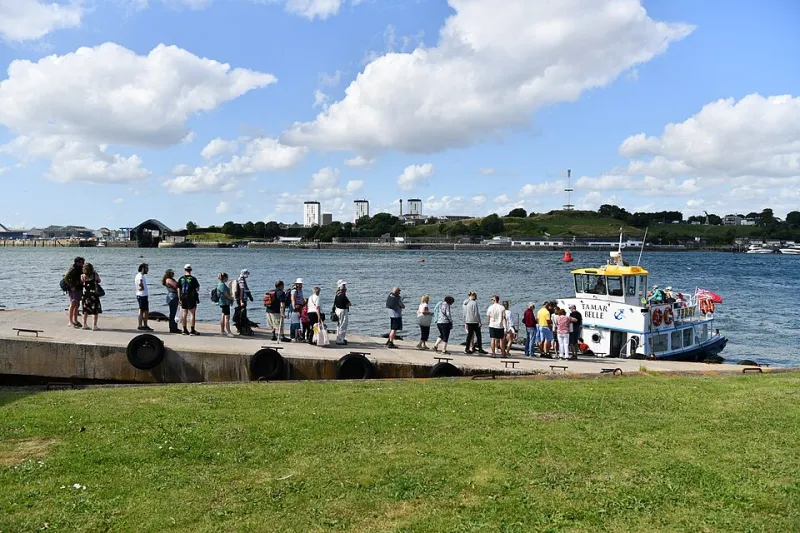
Photo: U.S. Navy photo by Petty Officer 3rd Class August Clawson, Public domain, via Wikimedia Commons
The inshore waters forecast is one of the great unsung bits of British public service. It arrives four times a day, costs nothing, and tells you more about your weekend than any app with a premium tier. It is also written in a dialect that assumes you already know what 'slight, becoming moderate' looks like from the helm. Most of us learned it the hard way, halfway to the harbour mouth, with the spray already over the coaming.
This is an attempt to unpack it without the jargon, using the rules of thumb that actually get used on the water.
Read the whole paragraph, not just the number
The forecast gives you wind direction and speed, sea state, weather and visibility. Most people read the wind figure and skip the rest, which is like checking the price of a car and ignoring whether it has wheels. Sea state is often the number that decides your day, particularly in anything under six metres. Visibility tells you whether the fog will let you back in. Weather tells you if the squall line is going to arrive at exactly the moment you are faffing with the trailer.
One more thing worth knowing: the wind figure is an average over ten minutes, measured at ten metres above open water. Your deck is not ten metres up. Your dinghy's kicking strap is definitely not. On a blustery day the difference between the forecast figure and what hits your sails is not a rounding error.
Gusts are the honest number
When the forecast says 'southwesterly 4 to 5, occasionally 6', it is not offering you three separate days. It is describing a range you will get all of, in patches, usually on the exposed bits.
A rule that has served me well: sail to the gust figure minus one. If it is gusting 6, rig and reef for a 5 and be pleasantly surprised. For cruisers, the mean figure decides whether you go and the gust figure decides how you leave the mooring.
Wind against tide is the real multiplier
Four knots of wind with the tide underneath it is a pleasant afternoon. The same four knots against a spring ebb at a headland is a short, steep, boat-stopping mess that will have crew members quietly re-evaluating their hobbies.
Places where this bites: the western Solent on the ebb in a westerly, the Swale, Start Point, Bardsey Sound, the Narrows at Strangford, the Sound of Mull, anywhere off a headland with a name ending in 'Ness'. The sea state in the forecast is a general figure for the zone; it does not know about your particular headland.
A workable shortcut: if it is springs and the wind opposes the tide, add one to the sea state in your head. If it is neaps, take half a notch off. It is not science, but it puts you in the right postcode.
Sea state is meaningless without your boat length
'Slight' means waves of half a metre to a metre and a quarter. In a ten-metre yacht that is a lovely day out. In a three-and-a-half-metre dinghy launched off a beach, a slight onshore sea state is the difference between a sail and a swim.
Ask the question in the form of your own boat: can this hull, with this crew, handle the upper end of that band, on this heading? A short chop on the nose is exhausting in a small boat even when the numbers look tame. Running downwind in the same chop is a different day entirely.
Fetch: how much water has had a chance to build
Waves need runway. Six miles of open water in a force 5 gives you a modest chop. Sixty miles gives you something with shoulders on it. Forecast zones are big, and a zone boundary can hide a huge difference between an exposed corner and a sheltered one ten miles away. Look at a chart, work out which way the wind has travelled before it reaches your launch spot, and you will have a better read on the sea state than the paragraph alone can give you.
Three habits worth stealing
Compare today with yesterday. The trend tells you more than the snapshot. If the wind has been backing all night and the pressure is falling, you are on the front edge of something, and the forecast may be behind the reality.
Look at the pressure chart for thirty seconds. Tightly packed isobars mean strong, steady wind. Widely spaced with a kink in them mean shifty, gusty, unpredictable sailing, which is often harder work than a straightforward breeze.
Write your limit down before you look at the forecast. One sentence: 'I'll go if it's force 4 or less, sea state slight, and I can be off the water by four.' Deciding your threshold in advance stops you negotiating with yourself at seven in the morning, when optimism is at its peak and the bacon is already in the cool bag.
A worked example
Say it is a Saturday in the Solent, and the inshore forecast reads: southwesterly 4 to 5, occasionally 6, sea state slight becoming moderate, showers, good visibility.
On a yacht out of Hamble, that is a reef-in-the-main day with a decent beat west and a fast run home. Fine, if the crew are up for it and the ebb does not coincide with the worst of the gusts at the western end.
In a dinghy off Hill Head, with a southwesterly blowing straight onshore, 'slight becoming moderate' means breaking chop at the slipway and a launch that will cost you a soaking before you even get the trolley back. That is the day to head inland to a sheltered corner of Chichester Harbour, or to stay home and paint the garage.
Same forecast. Two entirely different verdicts. The forecast did not change; the boat and the shoreline did.
When to simply not go
If two of your three variables, wind, sea state and tide timing, are sitting at your limit, stay ashore. A forecast is a distribution of possibilities, not a promise, and the upper end of the range always turns up eventually. The trip you cancel costs you a Saturday. The trip you push costs rather more.
There is no shame in a day spent at the kitchen table with the chart out, the forecast open and the kettle on. That is passage planning. It counts.