The Calm-Saturday Storm Drill: Getting an Afloat Winter Berth Ready Before the Red Warning

Photo: Piet Mondrian, Public domain, via Wikimedia Commons
November has a way of serving up two kinds of weekend. One is flat grey, drizzle on the pontoon, nothing much happening. The other arrives with a named storm, a Met Office red warning and a marina WhatsApp group full of photos of someone else's canopy trying to leave home. If your boat is staying afloat this winter, the useful work belongs on the first kind of weekend.
This is not a lay-up article. It is a dress rehearsal: a couple of hours spent setting the boat up so that a red warning does not turn into a panicked drive to the pontoon in horizontal rain. You do not need to strip the rig or empty the lockers. You need to make the boat forgiving of a bad night.
Start with the berth, not the boat
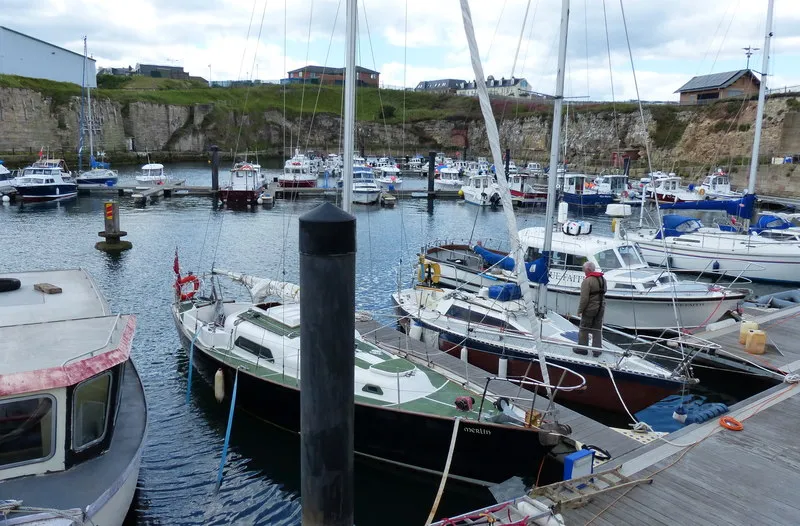
Before you touch a line on deck, walk the pontoon. Look at the cleats, rings, fairleads and piles your boat actually uses. Are they tight? Are they worn? Is there a sharp edge where a line has been pulling since the summer? Check how your neighbours are moored, too. A loose boat upwind can become your problem.
Think about where the wind will come from. In a marina, it is rarely just the wind. There is surge, fetch across the harbour and the odd bit of reflected chop. If your berth is exposed, ask early whether a more sheltered finger is available for the worst of it. That conversation is much easier on a quiet Saturday than it is when the warning has already been issued.
Lines with give, not guitar-string tension
A common mistake is to winch everything down hard. Lines need some elasticity. Nylon has more stretch than polyester, which is why it makes a good spring. Where you can, use a snubber or a purpose-made elastic compensator to take the snatch out of the load.
Aim for a layout that shares the work: bow line, stern line and at least one spring each way, with leads that are long enough to absorb movement. Doubling up is fine, but do not run both lines through the same tight fairlead. Give yourself a little slack for surge, then check that the slack cannot jump off a cleat. A proper cleat hitch, finished neatly, is worth more than a heroic knot that jams under load.
Chafe is the quiet thief
Chafe does not announce itself. It waits until the wind has been on for six hours and then it saws through the line you trusted most. Walk the whole run of every line. Check where it passes through fairleads, over toe rails, around cleat horns and against the pontoon edge.
Fit chafe gear at the obvious contact points: plastic tube, leather, old hose, or proper chafe sleeves. Check the inside of eye splices as well as the outside. If a line is already furry, replace it or move it to a lower-load job. Take a few photos of the final layout on your phone. After a storm, you will want to know how it was meant to look.
Drains, lockers and the things that fly
Cockpit drains and scuppers block with leaves, grit and the general debris of autumn. Clear them before the rain arrives. If water cannot run away, it pools, and then it finds its way below. Check the cockpit lockers for loose kit: buckets, fenders, coiled ropes, a forgotten BBQ. Anything that can become a projectile should be lashed down or taken home.
Test the automatic bilge pump and float switch by hand. Make sure the battery has enough charge to run it if the shore power trips. Turn the dinghy over or secure it properly. Remove flappy sail covers and loose canvas if severe weather is forecast. A small cover that flaps for twelve hours can do more damage than a big one that is tied down.
Canopies and covers: reduce the sail area
Sprayhoods and cockpit canopies are brilliant until they become parachutes. Check zips, press studs, frame joints and tie-down points. Add secondary ties if there is any doubt. If the forecast is genuinely severe, ask the marina whether removing side panels is sensible. Do not over-tighten the frame; a little movement is better than a cracked joint.
Roll and tie anything loose. Avoid draping a tarpaulin over the boat unless it is properly framed and drained. A loose tarpaulin fills with water, then wind gets under it, and suddenly you have a very expensive kite.
The marina-office conversation
This is the bit many owners skip. Ring or visit the office before the warning, not during it. Ask what their storm plan is, whether extra lines are allowed, and whether they will do a pontoon round. Confirm the best contact number for you. Ask about access restrictions, barrier times and where to park if you need to attend.
Be pleasant and specific. You are not complaining; you are coordinating. A marina team that knows your boat and your number is a useful ally when the wind gets up. If you are away for the worst of it, tell them. If you plan to come down afterwards, ask when they expect to allow boarding.
A dull-Saturday checklist
- Walk the berth and photograph the current line layout.
- Check cleats, fairleads and pontoon fittings for wear.
- Fit chafe gear and replace any tired lines.
- Clear cockpit drains, scuppers and lockers.
- Test the bilge pump and float switch.
- Secure the canopy, covers and dinghy.
- Note the forecast wind direction and any exposed leads.
- Call the marina office and confirm contact details.
- Set a weather alert on your phone.
- Decide now whether you will attend during a red warning or stay away.
When the warning is red
If a red warning arrives, do not make the drive unless it is genuinely safe and necessary. Go early if you must, tell someone where you are, and do not attempt anything heroic on a bouncing pontoon. After the storm, wait for the marina's all-clear. Check lines and chafe before you step aboard, look for shifted fenders and water in the bilge, and do not start the engine until you have had a proper look round.
A calm Saturday spent on lines, drains and a five-minute phone call is not glamorous. But it is the difference between a boat that rides out a named storm and a boat that gives you a story you would rather not tell. The aim is not perfection. It is a setup that forgives a bad night.