Read the Wall Before You Sign: A Berth-Hunter’s Guide to Harbour Notices
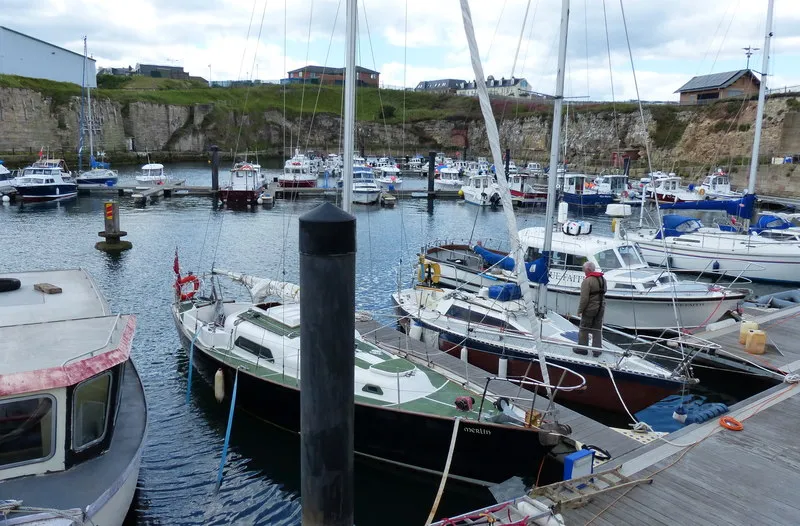
Photo: Mat Fascione , CC BY-SA 2.0, via Wikimedia Commons
Most berth hunters do the sensible things: walk the pontoons, sniff the showers, ask about the waiting list and glance at the price per metre. Then they sign. What many skip is the scruffiest due-diligence document in the harbour: the noticeboard by the office door. It is not a contract, and it is not a brochure. It is a working record of how the place runs when nobody is trying to impress you.
Start with the state of the board, not the notices
A harbour noticeboard is a small civic institution. It is where the harbourmaster tells you the dredger is coming, where the yacht club advertises its winter talk, and where someone has written ‘DO NOT BLOCK THE SLIPWAY’ in marker pen because someone else kept blocking the slipway. Read it as evidence.
Is the board a tidy grid of dated, printed notices, or a shanty of curling laminate and sun-bleached A4? Neither is automatically bad. A busy board can mean an active harbour that communicates often. A sparse board can mean a quiet harbour that rarely has much to say. The useful question is whether the notices are current, specific and signed by someone. A notice that says ‘Dredging: south basin, w/c 16 November 2026, no berthing on pontoon C’ tells you more than a glossy page about ‘ongoing investment’. A notice that says ‘Dredging soon’ and has been there since the Queen’s Diamond Jubilee tells you something else.
Dredging, depths and the scrubbing grid
For a berth hunter, dredging notices are gold. They tell you where the harbour knows it has a depth problem, when it plans to fix it, and which corners will be unavailable while the work happens. If the board mentions dredging in the same basin as the berth you are being offered, ask direct questions: will the berth be inaccessible, will you be moved, and is the advertised depth chart based on a recent survey or a hopeful memory?
Look also for closures of the scrubbing grid, the slipway and the hammerhead. The hammerhead is the bit everyone uses to turn, wait or sort out a fouled prop; if it is closed for repairs for three weeks in December, that affects your winter routine more than the colour of the shower tiles. A notice about the scrubbing grid being out of action until spring is a useful reminder that boat care is not just about your own boat. It is about whether the harbour’s shared kit is working when you need it.
Events, takeovers and visitor rules
A harbour that hosts regattas, boat jumbles, yacht club races or a Christmas lights flotilla is usually a harbour with life in it. It also means the visitor pontoon may be booked solid on the dates you fancied. The noticeboard is where event takeovers appear first: ‘Visitor berthing suspended 12–14 June for the regatta’, ‘Hammerhead reserved for race committee’, ‘No rafting on the east trot during the festival’.
Read the visitor berthing rules carefully, even if you are applying for a permanent berth. They reveal the harbour’s assumptions. Is visitor berthing first-come, first-served, or must you ring the office before 16:00? Are visitors allowed to raft? Is there a maximum stay? Are dogs allowed on the pontoons? Is there a charge for water? A board that spells this out is a board that has thought about how the place works. A board that leaves it vague may still be friendly, but you will be relying on oral tradition rather than written rules.
Outages, utilities and the small print of winter
Water and power notices matter enormously for a winter berth. ‘Fresh water isolated from 1 November to 31 March’ is not a trivial line if you planned to flush the engine and hose the decks. ‘Power pillars 14–16 out of service for inspection’ is manageable for a weekend; ‘power unavailable on D pontoon until further notice’ is a different proposition. Photograph these notices and ask whether they are planned or emergency works.
Also watch for the etiquette notices. ‘No hoses on the pontoon’, ‘Quiet after 22:00’, ‘No bikes on the walkway’, ‘Dogs on leads past the slipway’. These are the harbour’s house rules, and they tell you what kind of community you are joining. A board full of passive-aggressive capitals about bin bags and trolleys is not necessarily a bad sign; it often means people care. But it is a clue that the harbour has had trouble with the basics.
Read the gaps and the contradictions
Gaps are informative. If there is no emergency contact number, no VHF channel, no tide table and no notice about visitor berthing, ask why. It may simply be that the information lives in the office. But a board with no dates, no signatures and no useful operational detail is a board that is being used as decoration rather than communication.
Contradictions are better still. Two notices about the same hammerhead closure, one dated October and one dated November, suggest a place where version control is not a strong point. A handwritten amendment over a printed rule is normal in a working harbour; a printed rule that no one has updated since a previous regime is worth querying. Ask the harbourmaster which notice is current. The answer tells you as much as the notice itself.
The five-minute board test
Before you pay a deposit, spend five minutes with your phone camera. Photograph the board. Note the dates, the closures, the contact details, the visitor rules, the utility outages and the etiquette lines. Then ask three questions: what is changing this winter, what is the current depth alongside the berth, and who do I ring if something goes wrong out of hours?
A noticeboard will not tell you whether the berth suits your boat or your budget. It will tell you whether the harbour is run with care, whether the shared facilities are taken seriously, and whether the place is honest about its limitations. That is worth a few minutes by the office door, even in the rain.