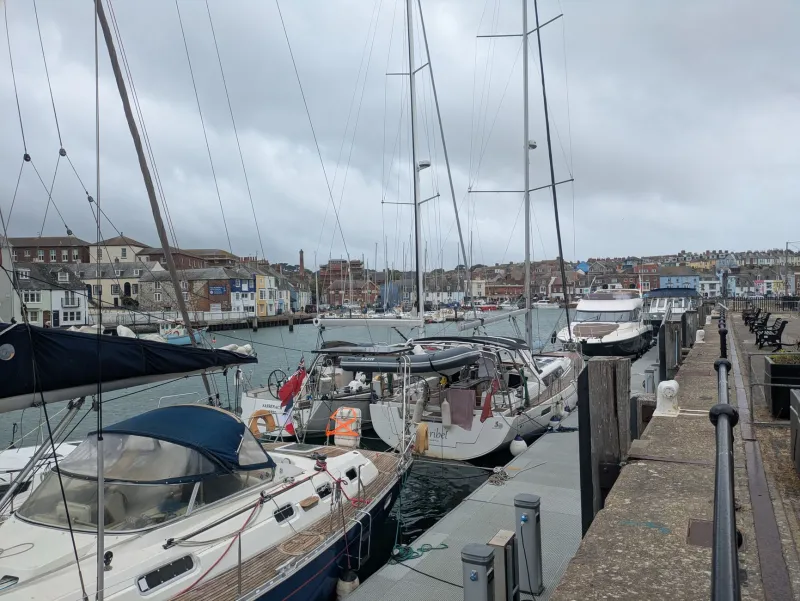
The Tide Goes Out, the Boat Stays Put: Making Peace With a Drying Mooring
Photo: Steve Partridge, CC BY-SA 2.0, via Wikimedia Commons
There is a particular sound to a drying mooring as the tide leaves: lines slackening, mud bubbling, a gull arguing with nobody in particular. For plenty of sailors, that sound is a warning. For others, it is the whole point. A mud berth is not a compromised marina berth. It is a different way of keeping a boat, and once you understand the rhythm it can be one of the most practical and affordable options on the UK coast.
Why the falling tide is not the enemy
On a drying mooring, low water is not an interruption to the sailing day. It is part of the maintenance schedule. The boat settles, the keels take the weight, and for a couple of hours you have access to parts of the hull that marina berth holders pay a crane to reach. That is the quiet bargain at the heart of mud berths: you give up the convenience of coming and going at any state of tide, and in return you get cheaper berthing, sheltered water and a closer relationship with the bottom of your boat.
It suits the UK. Our estuaries, creeks and harbour corners are full of soft mud and sand that dry twice a day. Places like the Essex and Suffolk rivers, Chichester Harbour, the upper reaches of the Hamble, parts of the Solent and the quieter corners of north Wales and the North West all have long traditions of drying moorings. They are not a niche oddity. They are how a lot of British sailing actually works.
Match the mooring to the keel
This is the first question, and it is not negotiable. A bilge-keel boat is the natural fit for a mud berth: two keels give a stable platform when the tide goes out, and the boat can sit upright without leaning on a single fin. Lifting-keel and swing-keel boats can also work well, provided the keel is raised and the hull is designed to take the ground.
A deep fin keel is a different conversation. Some fin-keel boats can use legs or a cradle, and some harbours have suitable scrubbing piles or drying grids, but a casual mud berth is usually not the place to experiment. If the boat cannot sit comfortably on its own bottom, do not let a cheap mooring fee talk you into it. Ask the builder, the class association and the harbour master before you commit.
Also check the drying height. A berth that dries to soft mud is forgiving. A berth that dries onto shingle, old mooring chain or a hard patch is not. The difference is often visible at low water, so visit at the bottom of a spring tide rather than at high water on a neap.
Ask the harbour, then ask the neighbours
Harbour authorities know their patch, but the people on the next mooring know the weather. Ask both. You want to know how the berth behaves in a westerly blow, whether the ebb runs across the boat, how much scour there is around the mooring sinkers, and whether the boat tends to sit on one bilge. A berth that looks level on a calm day can develop a definite opinion when the wind is against the tide.
Check the access, too. A mud berth is only useful if you can get to it. Is there a pontoon, a slipway, a dinghy park or a walk across the marsh? Does the harbour dry completely, or is there a sill with a half-tide gate? What happens on a neap tide when the water barely leaves? These details matter more than the brochure photograph of a pretty creek at sunset.
The low-tide walk-round
Once the boat is settled, resist the urge to treat low water as downtime. It is the best inspection opportunity you will get all month. Start at the bow and work aft. Look at the forefoot, the keel roots, the rudder, the propeller, the shaft, the anodes and the stern gear. Check for blisters, chips, weeping fittings and any sign that the boat is resting unevenly.
Look at the mooring lines as well. They should have enough slack to let the boat settle without snatching, but not so much that it wanders. If the boat is leaning, find out why before the next tide. It may be as simple as a line that is too tight or a fender that has become a pivot. It may be a soft patch under one keel. Either way, low water is when you want to know.
Keep a note of what you find. A small notebook or a phone note is enough: dates, tide heights, wind direction, anything that looked different. Patterns emerge quickly on a drying mooring, and patterns are what keep small jobs from becoming expensive ones.
Maintenance that actually matters
Drying moorings are kind to antifouling in one sense and cruel in another. The hull dries, which can help with certain finishes, but the constant cycle of wet and dry also works on anodes, stern gear and any fitting that does not like being exposed. Check anodes more often than you would in a deep-water berth. Keep an eye on seacocks, skin fittings and the rudder stock. Rinse the deck and topsides when you can, especially if you are up a muddy creek where the rain is cleaner than the river.
Mooring tackle deserves an annual look, not a hopeful glance. Shackles wear, chains corrode, sinkers move and pick-up buoys chafe. If the harbour runs a mooring inspection scheme, use it. If not, ask when the tackle was last lifted and inspected, and get a second opinion if the answer is vague.
When the weather turns
A drying mooring in a sheltered creek is a peaceful thing. A drying mooring exposed to a fresh easterly is a different animal. Wind against tide can make the boat work at its lines, and a swell running into a drying harbour can turn a gentle grounding into a uncomfortable few hours. Know the forecast, know the berth and know when to stay ashore.
It also helps to tell someone your plans if you are working aboard over low water. Mud is not a reliable surface for a solo adventure, and a phone in a pocket is no substitute for someone knowing where you are. The same goes for the boat: if you are leaving her on a drying berth for a long spell, check the lines after the first big blow and again after the first spring tide.
The quiet appeal
The best thing about a mud berth is not the money, although the money helps. It is the rhythm. You learn the tide without looking at a table. You notice the boat settling, the birds working the mud, the light changing across the creek. You do not treat low water as a failure of the marina. You treat it as the part of the day when the boat is yours to inspect.
That is not for everyone. If you want to leave work at six and be under way by half past, a deep-water pontoon is probably the better answer. But if you are happy to plan around the tide, a drying mooring can be affordable, sheltered and quietly satisfying. The falling tide is not the enemy. It is the reason the berth exists.