The Realistic Lay-Up: A November Boat Care Checklist That Won't Eat Your Whole Month

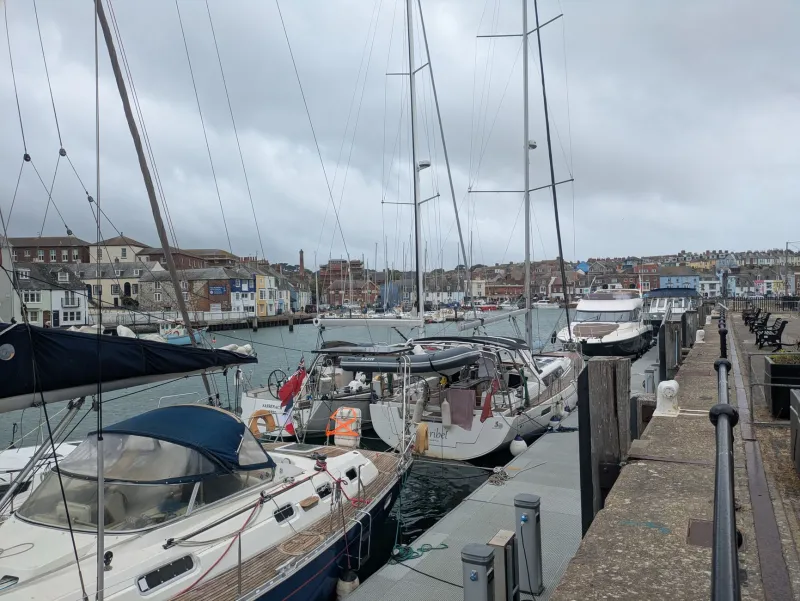
Photo: Dhowes9, CC BY-SA 3.0, via Wikimedia Commons
November is the month where good intentions meet a four-o'clock sunset and a yard that's already three deep in tarpaulins. Whether you've got a lift-out booked for next weekend or you've just tied the covers down and quietly wondered whether that was enough, here's a checklist that respects your time — and a short list of jobs you can cheerfully postpone.
Water does more damage than frost
Frost gets blamed for everything, and most of the time it's the wrong suspect. Ice splits a hose, granted. But the expensive damage usually comes from water left sitting in the wrong places for four months, quietly working on metal, seals and upholstery.
Start with the engine. A raw-water-cooled diesel wants its seawater side flushed through with fresh water and then filled with a proper antifreeze mix — not a hopeful splash of whatever's left in the garage. Indirect-cooled engines need the freshwater circuit checked for the right concentration, because a weak summer mix won't survive a proper East Coast frost. Outboards should be tilted down to drain, carbs run dry if you've got them, and the gear oil checked now rather than in April. Milky oil in November is a seal you can still book in; milky oil in April is a season you've lost.
Fill the diesel tank. A full tank has less bare steel to condense on, and condensation is what feeds the bug that greets you in spring with a filter full of sludge. Add a biocide, and change the filters before lay-up, not after — you want clean fuel settling, not dirty fuel stewing.
The freshwater system is the bit people skip. Drain the tank, pump the lines dry, then either run potable-grade antifreeze through the taps, shower and calorifier or blow the lines through with air. Don't forget the heads: pump fresh water through, winterise, and leave the valves somewhere that lets the seals breathe rather than sit compressed for months.
Batteries want a job, not a holiday
A battery left flat in the cold is a battery that sulphates and never quite comes back. Take them home if you can, or leave them aboard on a smart charger that actually maintains rather than one that cooks them dry. Solar trickle panels work well if the boat's somewhere with any light at all, but check the controller is doing its job before you walk away.
While you're in there, clean the terminals, smear them with something protective, and check the electrolyte if they're serviceable. Cold doesn't kill batteries outright — neglect does.
Ventilation beats sealing
This is the single most useful hour you'll spend. A boat sealed up tight against the weather becomes a condensation chamber, and condensation is what turns a dry cabin into a mould farm by February. Cushions should be stood on edge, locker lids left open, bedding taken home.
Keep the vents open. Dorade boxes, mushroom vents, a slightly ajar washboard with a cover over it — whatever lets damp air out. A tube heater or dehumidifier on a timer is genuinely worth the shore power, but only if the boat is ventilated; running one in a sealed cabin just makes warm damp air.
Covers: think tent, not bag
A cover should shed water and let vapour escape, not wrap the boat in polythene. Breathable canvas, tented up so rain runs off, with a gap at the bottom for air to move. Straps want to be snug but not strangling, and every one of them needs a check for chafe against gelcoat and stanchions.
Walk the boat after the first proper blow. Every year someone finds a flogging strap has been sawing at a toe rail since Bonfire Night.
Lines, berth and the post-storm circuit
Doubled warps, decent chafe gear, and a proper look at the cleats and shackles you're relying on. If you're staying afloat, check the pontoon as well as the boat — a seized swivel or a tired shackle isn't your problem until it is. Winter storms and spring tides together do things that summer weather never tests.
Then build in a routine. After every named storm, or once a fortnight, whichever comes first: a walk down the pontoon or a drive to the yard. Ten minutes. It's the cheapest insurance going.
The paperwork nobody enjoys
Give your insurer a ring rather than assuming. Most policies have lay-up conditions — dates ashore, whether the boat must be unattended for a set period, whether frost damage is covered and what you must have done to qualify. Tell them if you're moving to a hardstanding. If you're leaving her afloat, confirm what the policy says about winter afloat berths.
Also leave the marina or yard a mobile number that you'll actually answer in January.
What can genuinely wait until spring
Antifouling, polishing and rigging tweaks can all slide into March. Sails, though, want washing, drying properly and storing somewhere dry and rodent-free now — damp sails folded in a bag are a horrible discovery in April. Check the anodes while she's out, because a half-wasted anode is a five-minute swap on the hard and a diving job in June.
And do the oil change before lay-up, not after. Contaminants sitting in the sump all winter is exactly the wrong way round.
Get the water out, keep the air moving, keep an eye on the lines. Do those three things and the rest of the list will keep until the days get longer.